Industry Spotlight: Zero Homes Raises $16.8M to Modernize Home Upgrades
Denver-based Zero Homes recently raised $16.8 million in Series A funding to expand its digital platform that helps homeowners plan and execute major home upgrades like heat pumps, solar installations, and energy-efficient appliances.
The company's approach is to streamline the messy process of planning home improvements by letting homeowners scan their house with a smartphone to generate a digital model. The system then produces upgrade plans, estimates, and connects homeowners with vetted local contractors to complete the work.
Why this matters to home service operators:
- Demand for upgrades and repairs isn't the problem. Coordination is.
- Platforms like Zero Homes exist because homeowners want faster timelines, clearer pricing, and predictable scheduling — things that many contractors struggle to deliver consistently.
- Investors backing tools like this are betting on a simple idea: the bottleneck in home services isn't interest from homeowners — it's the industry's ability to deliver work efficiently once that demand shows up.
Capacity Is the Real Bottleneck, Not Lead Flow
Every operator loves a steady stream of leads — until the phones are ringing off the hook, trucks are backed up, and your team starts looking like extras in a disaster movie. More demand doesn't automatically mean more revenue. If your crew can't actually handle the jobs, all those leads are just chaos dressed up in opportunity.
The smart operators know it's about building systems and people that can absorb growth without melting down. Scheduling software and repeatable workflows — even simple checklists — aren't glamorous, but they're the difference between a business that can scale and one that just burns out fast.
This isn't a theory, either. Contractors who automate dispatch, streamline customer updates, and make the most of their crew capacity can take the same size team from three jobs a week to seven — without hiring extra hands. Scale without growing your payroll, because the real bottleneck is whether your business has the bandwidth to actually fulfill them.
Think of it this way: more leads are useless if your team is flat-out busy, stressed, or missing jobs. Fix the backbone first — people, systems, and structure — and the leads will finally start paying off instead of giving you headaches.
Takeaway: Growth stalls because the business isn't structured to absorb the work. The operators who scale past that ceiling focus on expanding capacity first, then increasing demand.
Insights from X
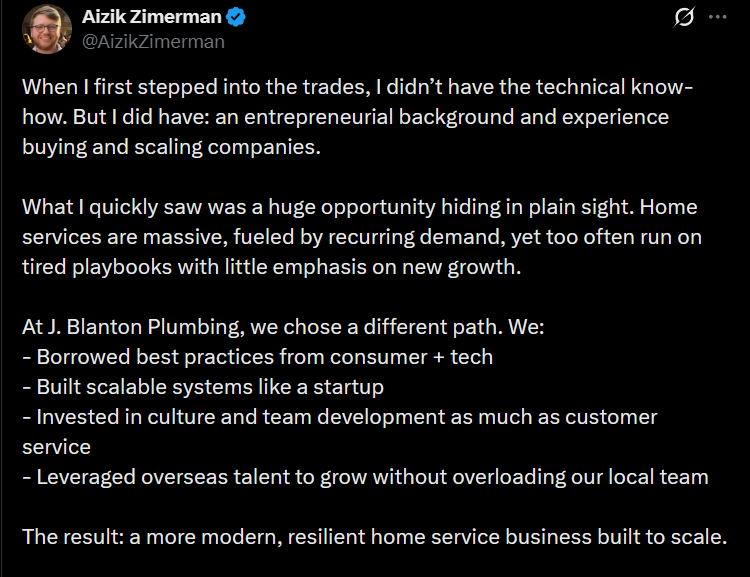
Operator takeaway: Many home service businesses stall because they're still running on the same playbook that worked when the owner was doing everything themselves. The operators who break out treat the company less like a trade shop and more like a modern business — building systems, investing in people, and borrowing ideas from industries that already figured out how to scale.
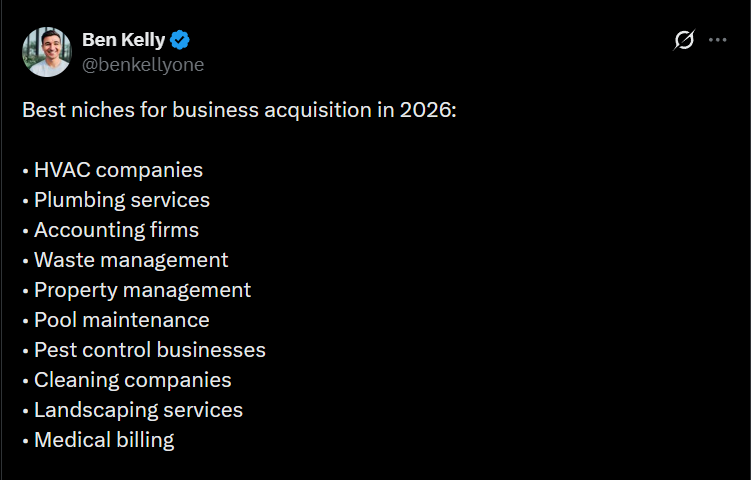
Operator takeaway: These businesses sit on recurring demand, fragmented ownership, and plenty of room for operational upgrades. They're perfect for operators who know how to tighten systems, modernize marketing, and run a cleaner business than the shop down the street.
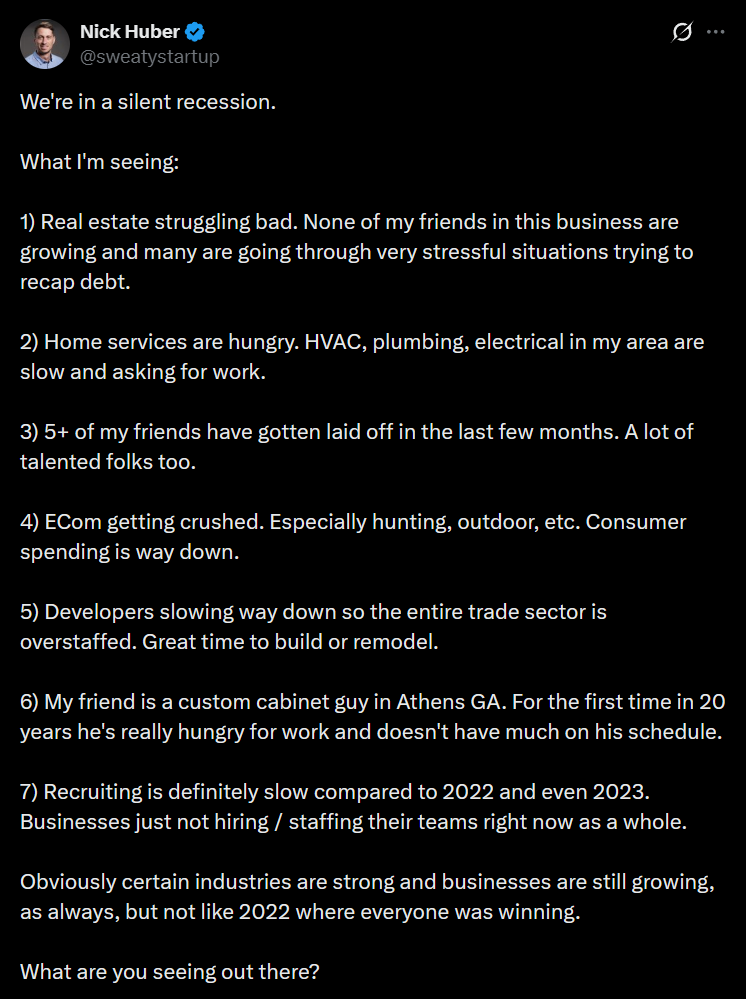
Operator takeaway: Market slowdowns don't hit every sector the same way. When construction cools off, trade capacity frees up — better hiring conditions, easier partnerships, and a chance to capture market share while competitors pull back.
If your leads are piling up while your team's juggling everything, it's time to fix operations before turning up the dial. Book a strategy call and let's build the capacity to match your demand.