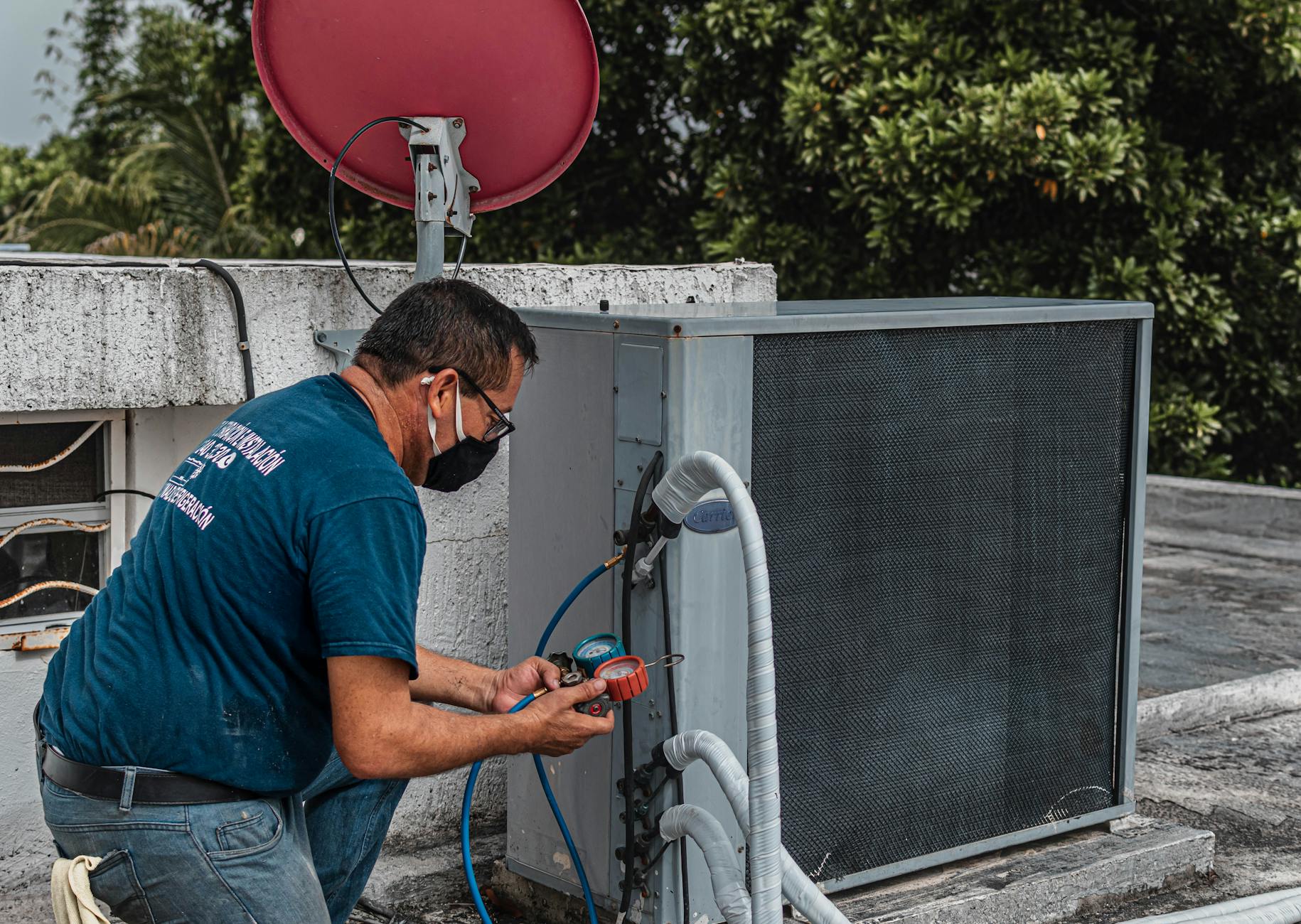
What's the most productive advertising for an HVAC company?
Depends on the call you want. HVAC has two kinds of buyers and they don't shop the same way.
- The emergency call. The AC died in July. They are choosing in minutes, usually from the top of Google or the map, and they call whoever looks trustworthy and can come today.
- The replacement buyer. The system is more than ten years old, or the repair quote was ugly. They research for weeks, read reviews, and compare two or three companies. This is where the year is won, because a full system replacement runs $5,000 to $15,000 and up.
Most HVAC advertising goes wrong by treating those two as one. One campaign, one budget, one cost per lead target. Google will happily fill that with cheap repair calls and you never see the installs you were paying for.
Here is roughly how the channels line up:
- Google Business Profile and the map pack. Emergency calls and "near me" searches. Slowest to build. Often the best lead once it works.
- Local Services Ads. Emergency calls. The fastest phone you can turn on. Pay per lead.
- Google Search. Replacement and high efficiency buyers doing research. Where the big tickets come from.
- Meta and retargeting. Shoulder season, maintenance plans, and the replacement buyer who visited and didn't call.
Are Local Services Ads worth it for HVAC?
For emergency calls, usually yes. LSAs sit above the regular ads with the Google Guaranteed badge, and you pay per lead instead of per click. For a no-heat call at 10pm, that is hard to beat.
Two catches. First, you still pay for junk: spam, wrong service, out of area, job seekers. Since LSAs moved inside Google Ads, the manual dispute button is gone. Google reviews charged leads on its own, and your only input is rating every lead. We wrote up how to run LSAs inside Google Ads if you're in the middle of that.
Second, LSA leads are not the best leads you can get. On Kingdom Heating and Air's account in the Kansas City metro, 31% of LSA leads were quotable. The Google Business Profile did twice that. Which brings us to the channel most HVAC owners underrate.
Is the Google Business Profile the best lead an HVAC company can get?
For a lot of shops, yes. On Kingdom's account, 62% of Business Profile leads were quotable, against 31% from LSAs. The catch is that the map is earned, not bought. It takes months.
Here is what that work looked like for Kingdom from March to August 2026: a profile post every two or three days, 49 directory listings corrected and kept corrected, a reply drafted for every review, FAQs rebuilt monthly, video on the profile, and categories, services, and service areas rebuilt to match how people in that metro actually search. On the same 169-point grid and the same ten HVAC terms, average map position went from 12.2 to 3.8. Top-three coverage went from 1.8% of the map to 57%.
SHIELD Mechanical in Camdenton, Missouri is the small-shop version. Great reviews, strong reputation, and nowhere in the map for the four services people search: 24/7 HVAC, boiler repair, installation, and AC repair. We rebuilt the profile with a separate strategy for each of those four and ran LSAs on a modest budget. Ranking across those services improved roughly tenfold, phone calls rose about a quarter, website clicks rose by half, and the LSA budget returned two and a half to one.
James Hussey at SHIELD put it this way: "Best marketing and Google page administration team I’ve ever found. I’ve tried several. This by far is the best. Worth every penny."
For a small HVAC company, the map pack is most of the market. A homeowner with no heat is not comparing five websites. They tap one of three results and call.
Where does Google Search fit for HVAC?
Search is where replacement buyers show up. "New AC unit cost." "High efficiency furnace installation." "Best HVAC company in [city]." They are researching, and the click has to land on a page that makes you look like the company to trust with a big purchase. A repair page with a coupon doesn't do that.
The rule we run: repairs and replacements get separate campaigns, separate pages, and separate cost per booked job. One blended target buys cheap repair calls to hit its number and starves the installs. The full setup is in our HVAC Google Ads guide.
Do Meta ads work for HVAC?
Not for the no-cool call. Nobody with a dead AC is scrolling Instagram for a fix. Meta earns its keep in the months most HVAC companies can't fill: maintenance plans and tune-ups in spring and fall, rebate season, and retargeting the replacement buyer who visited your site and hasn't called yet. More on that in Meta ads for HVAC.
The bigger point is the season. Peak and shoulder season should not get the same budget or the same message. Most HVAC companies run the same campaigns all twelve months, waste money in spring and fall, and come up short on the first 95 degree day.
How much should an HVAC company spend on advertising?
Two numbers. The agency fee and your ad spend.
DUO's paid ads management is $2,200 a month for one channel and $3,400 for two, flat. Local SEO with the Google Business Profile is $750 a month. We never take a cut of spend. Ad spend goes on your card, straight to Google and Meta. Every price is on our pricing page.
On ad spend, we recommend starting at $2,000 to $3,000 a month. Most HVAC companies we work with end up putting $3,000 to $7,000 a month into ads, depending on the market and whether the work is residential, commercial, or both. If someone quotes you a number before asking about your market and your service mix, they're guessing.
What should be in an HVAC marketing package?
Whoever you hire, here's the short list:
- Google Ads, LSA, and Business Profile accounts in your name, on your card.
- A flat fee. No percentage of ad spend.
- Every call and form tagged to the source that produced it.
- Every lead graded quotable or junk, and labeled repair, tune-up, replacement, or install.
- Closed jobs pulled back from your CRM, so the report ends at cost per booked job, not cost per lead.
- Budget that moves with the season and toward whatever is booking.
- Month to month. If it works, you stay. If it doesn't, you leave with everything.
Push back on long contracts, accounts held in the agency's name, and reports that stop at lead count. If more budget is the only fix you ever hear, that's the tell.
How do you know which advertising booked the install?
You track it all the way to the job. Every call and form tied to its source, including the no-cool call on the first hot day. Every lead graded. Every lead given a job type. Then your CRM sends closed jobs back and they get matched to the call or form that started them. That's how you find out which ads brought replacements and which brought capacitor calls. It's the same system on our HVAC marketing agency page.
If you want to see this on your market, book a call and bring your last three months of ad spend and booked jobs. We'll tell you straight which channel to fix first.
FAQ
What is the most productive advertising for an HVAC company?
For most shops it is a mix: Local Services Ads and a worked Google Business Profile for no-cool and no-heat calls, Google Search for replacement buyers, and Meta plus retargeting to fill spring and fall. Most productive means lowest cost per booked job, so it depends on which jobs you want more of.
Are Local Services Ads worth it for HVAC?
Usually, for emergency calls. You pay per lead and show above the regular ads. But you still pay for junk, and since LSAs moved inside Google Ads the manual dispute button is gone. Rate every charged lead and judge LSAs on booked jobs, not lead count.
Is the Google Business Profile really advertising?
It is free placement in the map, and for a lot of HVAC shops it is the best lead source they have. On Kingdom Heating and Air's account, 62% of profile leads were quotable, against 31% from LSAs. It just takes months of work instead of a credit card.
How much should an HVAC company spend on advertising?
Two numbers: the agency fee and ad spend. DUO's paid ads management is $2,200 a month for one channel and $3,400 for two, and Local SEO with the Business Profile is $750. We recommend starting ad spend at $2,000 to $3,000 a month. Most HVAC companies we work with end up between $3,000 and $7,000, depending on market and the mix of residential and commercial work.
What should be in an HVAC marketing package?
Accounts in your name, ad spend on your card, a flat fee with no cut of spend, every lead graded quotable or junk, repairs split from replacements, and a monthly report that ends at cost per booked job. Month to month. If the package is built around lead counts, keep shopping.